%20(1).avif)
Quick answer: The most common signs of sewer line damage are several drains slowing down at once, a toilet that gurgles when another drain runs, water backing up from the lowest drain in the house, a sewer smell, and a soggy or extra-green strip in the yard. A camera inspection confirms the cause before anyone digs.
Omaha Drain has run thousands of service calls a year since 2017, and a camera goes down every drain we clear. Here is what those cameras keep finding under Omaha homes.
Hi, I'm Raad, and I have spent 20 years looking inside pipes, which is a hobby I do not bring up on first dates. (Or second dates. There were no second dates.)
Here's what two decades of pipe-staring taught me: a sewer line almost never dies quietly. It drops hints for months, mostly through your toilet, which is the biggest snitch in the house. Below are the nine hints, ranked by how fast you should panic, plus what each one costs to fix in Omaha.
On this page:
- The 9 signs, ranked by urgency
- Why all your drains are slow at once
- Why the toilet gurgles
- Why the basement floor drain backs up
- What a sewer smell in the house means
- Tree roots in the sewer line
- Soggy or extra-green patches in the yard
- What a belly in a sewer line is
- How long sewer lines last
- Can sewer lines freeze in Omaha?
- How to check your cleanout safely
- What we see in Omaha sewer lines
- Who pays when a sewer line breaks
- What it costs to fix in Omaha
- FAQ
The 9 signs of sewer line damage, ranked by urgency
This table is the whole post on one screen, for the reader standing in a damp basement holding a phone and a plunger. (Hi. We see you. Put the plunger down for a sec.)
| Sign | What it usually means | How fast to act |
|---|---|---|
| Sewage coming up a floor drain, tub or toilet | Main line blocked or broken | Today. Stop running water |
| Sunken spot or hole over the sewer path | Soil washing into a broken pipe | Today. Keep people off it |
| Several drains slow at the same time | Blockage in the main line, past where the branch pipes join | This week |
| Toilet gurgles when the washer or tub drains | Trapped air pushing past a partial blockage | This week |
| Sewer or rotten-egg smell indoors | Sewer gas escaping a dry trap, loose seal or cracked pipe | This week. Open windows |
| Rats or sewer flies inside | A break they can travel through | This week |
| Clogs that come back within weeks | Roots, a belly or scaled-up pipe catching waste | Book a camera inspection |
| Soggy or extra-green strip in the yard | Line leaking into the soil | Book a camera inspection |
| New damp patches or cracks in basement walls | Long-term leak near the foundation | Book a camera inspection |
Urgency is Omaha Drain's rule of thumb from the field, not an official standard.
Two or more of these at once points to the main line, not one bad drain. This Old House says "multiple or recurring problems throughout your home often point to a failing sewer line." One sign is a hint. Three signs is a group chat about you.
Why are all my drains slow at once?
When the kitchen sink, tub and toilet all drain slowly together, the problem is almost always in the main sewer line, after the branch pipes join.
One slow sink is a sink problem; every drain slow is a sewer problem. (I rhymed. I'm as upset as you are.)
Try this: run the tub, flush the toilet, and watch the tub drain. If the tub water rises or burps, Plumbline Services says "you most likely have a main sewer clog." Congratulations, you just did plumbing diagnostics in your socks.
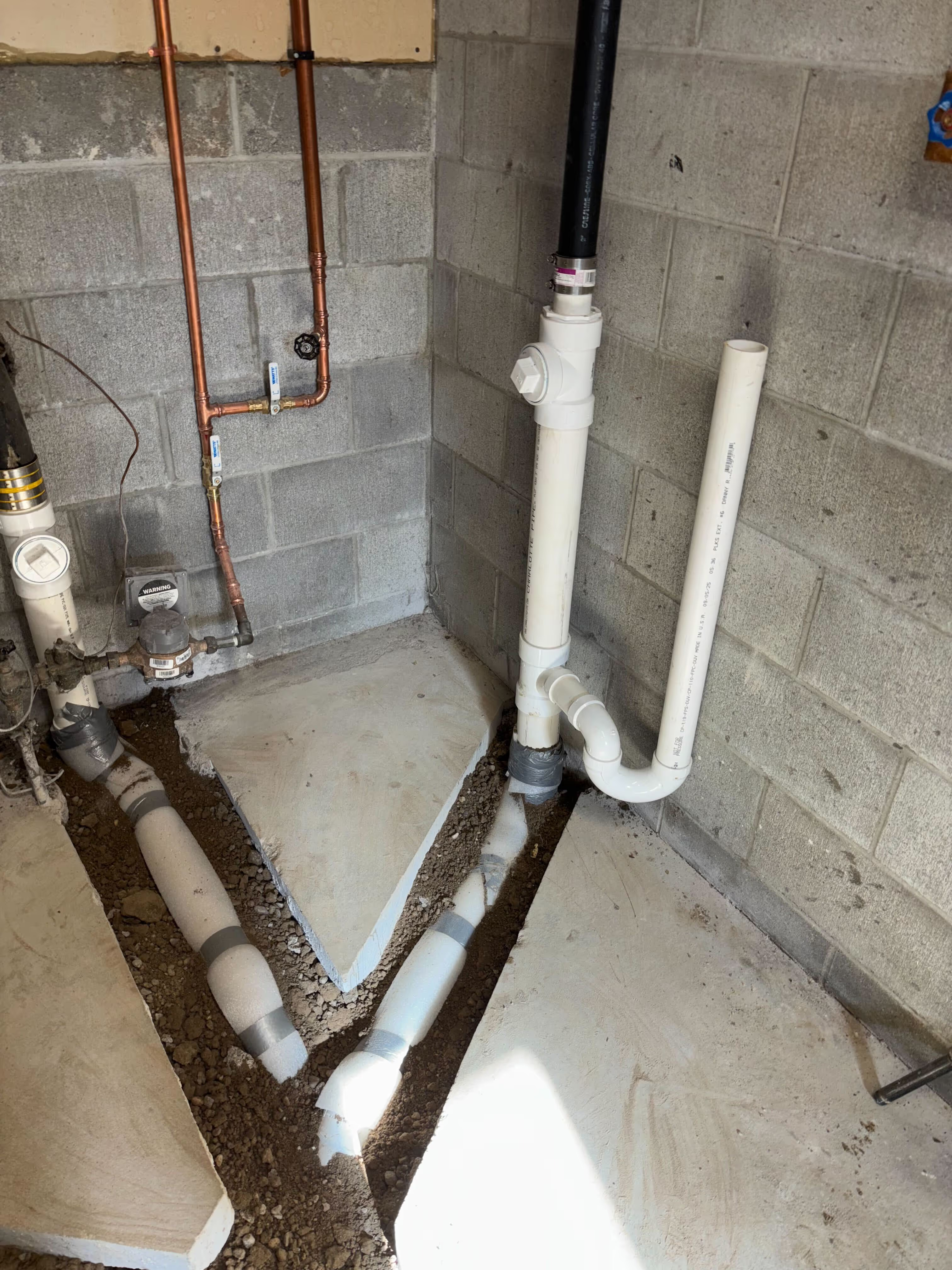
Why does my toilet gurgle when another drain runs?
A toilet that gurgles while the washer, tub or sink drains is pushing trapped air past a partial blockage in the main line. The City of El Cerrito lists gurgling toilets, and shower backups during the washer's spin cycle, among the first signs of roots in a sewer line.
Remember the snitch? This is the toilet clearing its throat before it tells you everything.
It has never once lied to me, which is more than I can say for my bathroom scale. If it gurgles every laundry day, pause the laundry marathons until the line gets checked. (Your gym clothes will survive. Probably.)
Why is my basement floor drain backing up?
The floor drain is usually the lowest opening in the house, so it's the first place sewage shows up when the main line can't carry water away. Everything you drain upstairs passes it on the way out. The basement is the bottom of the slide, and nobody wants to be at the bottom of this slide.
Homes east of 72nd Street sit on Omaha's older combined sewer, which carries wastewater and rain in the same pipe, per the Omaha CSO program. Rain and sewage sharing a pipe: romantic, until it isn't.
Cutting basement backups is one goal of that $2 billion program, due to wrap up by October 2037. So if your floor drain only acts up in big storms, the city side may be part of the story. (Finally, you're allowed to blame the weather.) If water is coming up right now, our 24-hour emergency drain service can be there today.
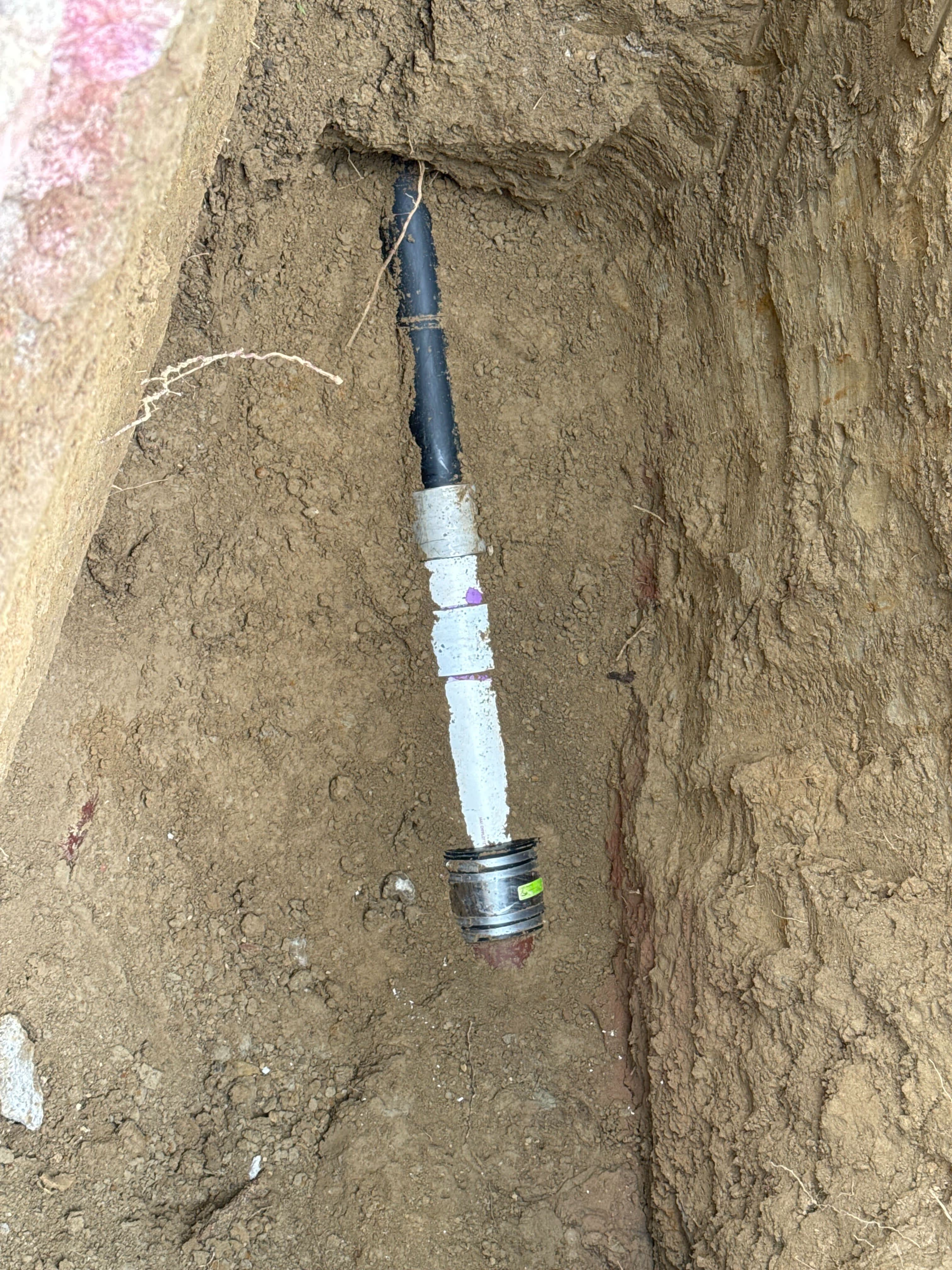
What does a sewer smell in the house mean?
A rotten-egg smell indoors usually means sewer gas is escaping from a dry trap, a loose toilet seal or a cracked pipe. That gas is mostly hydrogen sulfide, and OSHA notes it's heavier than air, so it collects in low spaces. Basements smell it first, which is rude but consistent.
Your nose is a great detector right up until it isn't. At high levels the gas knocks out your sense of smell within 2 to 15 minutes, per OSHA's hazard page, so "it stopped smelling" is not the good news it sounds like.
First, pour a bucket of water into any floor drain you never use, since a dry trap lets gas straight through. (A plumber just told you a free fix. My accountant has fainted.)
Can tree roots break into a sewer line?
Tree roots can't crack a healthy sewer pipe, but they find existing cracks and loose joints, grow inside, and widen them. NC State Extension puts it plainly: "Tree roots cannot create cracks in your sewer pipe." So the roots aren't the burglar. They're the guy who found the door unlocked. (He still ate everything in the fridge.)
Snaking cuts roots back, but they regrow. The City of Cleveland's forestry office recommends snaking every 12 to 18 months, and lining or replacing the pipe is the permanent fix. Cutting roots without fixing the pipe is like trimming your bangs: great for about six weeks. Here's how to tell if tree roots are growing in your sewer pipes.
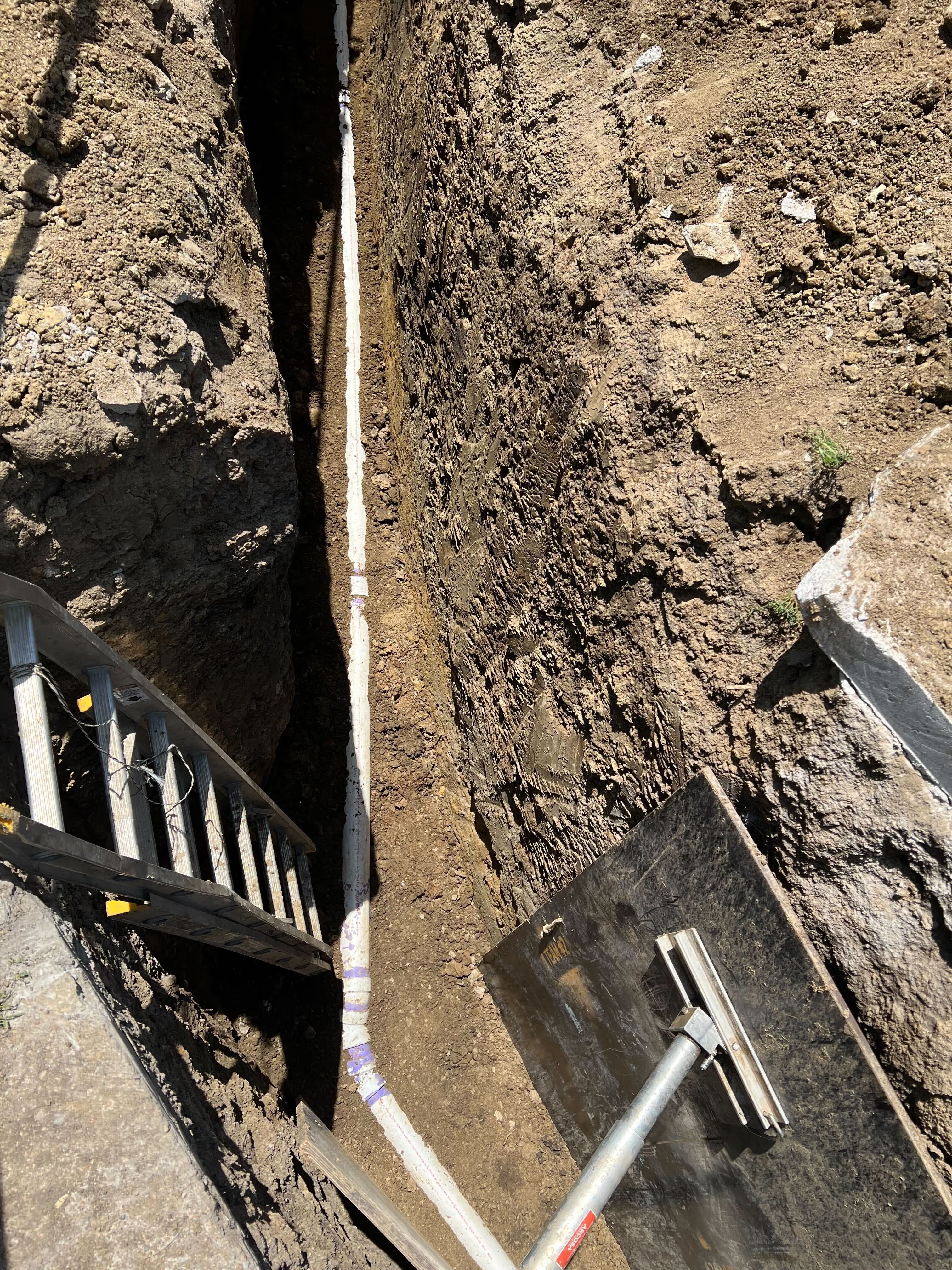
What do soggy or extra-green patches in the yard mean?
A strip of grass that's greener, softer or wetter than the rest, along the path from your house to the street, often means the sewer line is leaking into the soil. Bob Vila lists soggy spots, sinkholes and unusually lush grass among the classic signs.
Your lawn isn't thriving because you finally cracked fertilizer. (Sorry. I wanted that for you too.)
A sunken spot is more urgent, because soil may be washing into a broken pipe. Rats know the trick too: the City of Marshalltown, Iowa warns they tunnel through breaks in clay sewer pipes and can climb house drains, toilet bowls included. I'm sorry you read that sentence. I'm sorrier I typed it.
What is a belly in a sewer line?
A belly is a low, sagging section of sewer pipe where water and waste sit instead of flowing. Trenchlesspedia names poor bedding under the pipe at installation as the main cause, with settling soil and erosion close behind.
Basically the pipe got a dad bod. (I'm allowed to say that. I have one.)
On camera, a belly shows up as water getting deeper partway down the line. Small ones can sometimes just be watched, but Mr. Rooter notes lining "cannot correct severe sags," so a bad belly usually means digging up that section. Clogs that keep coming back at the same spot are the belly's love letters.
How long do sewer lines last?
Most sewer lines last 50 to 100 years depending on the material, according to This Old House. That range hides big differences between pipes:
| Pipe material | Typical lifespan | Source |
|---|---|---|
| PVC | 100 years or more | This Old House |
| Cast iron, below ground | 50 to 60 years | InterNACHI |
| Clay | 50 to 60 years in ideal conditions | Roto-Rooter |
| Orangeburg (tar-paper pipe) | Up to 50 years, warping after about 30 | PHCP Pros |
Omaha's homes skew older. The median Omaha home was built in 1974, against 1981 nationally, and 43% went up before 1970, per Census data. A lot of us are flushing into pipes older than our parents' wedding photos. (Some pipes aged better than the photos.)
Plenty of that old cast iron is still in one piece but crusted with scale inside, which narrows it the way gunk narrows an old garden hose. That's a job for cast iron pipe descaling, not a shovel.
Can sewer lines freeze in Omaha?
Yes, and they always pick the coldest morning of the year to do it. Sewer lines freeze when they sit shallow, the ground is dry, there's no snow cover and the cold lasts for days, according to NDSU Extension.
A house left empty for a week or more, or a faucet dripping a slow trickle, raises the risk. Nebraska pipes hate January too. They're just quieter about it than we are.
Keep the roof vent clear of snow, which the City of Bloomington, Minnesota says helps keep the house line above freezing. If every drain backs up on a cold morning, stop running water, since more water just backs the line up further. Pouring more water at a frozen line is like pressing the elevator button harder.
How do I check my sewer cleanout safely?
The cleanout is a capped pipe, usually in the basement floor or the yard near the house, that opens straight into your main sewer line. Checking it tells you if the main line is blocked, and makes you look extremely competent to anyone watching. Here's the safe way, per Logan Services:
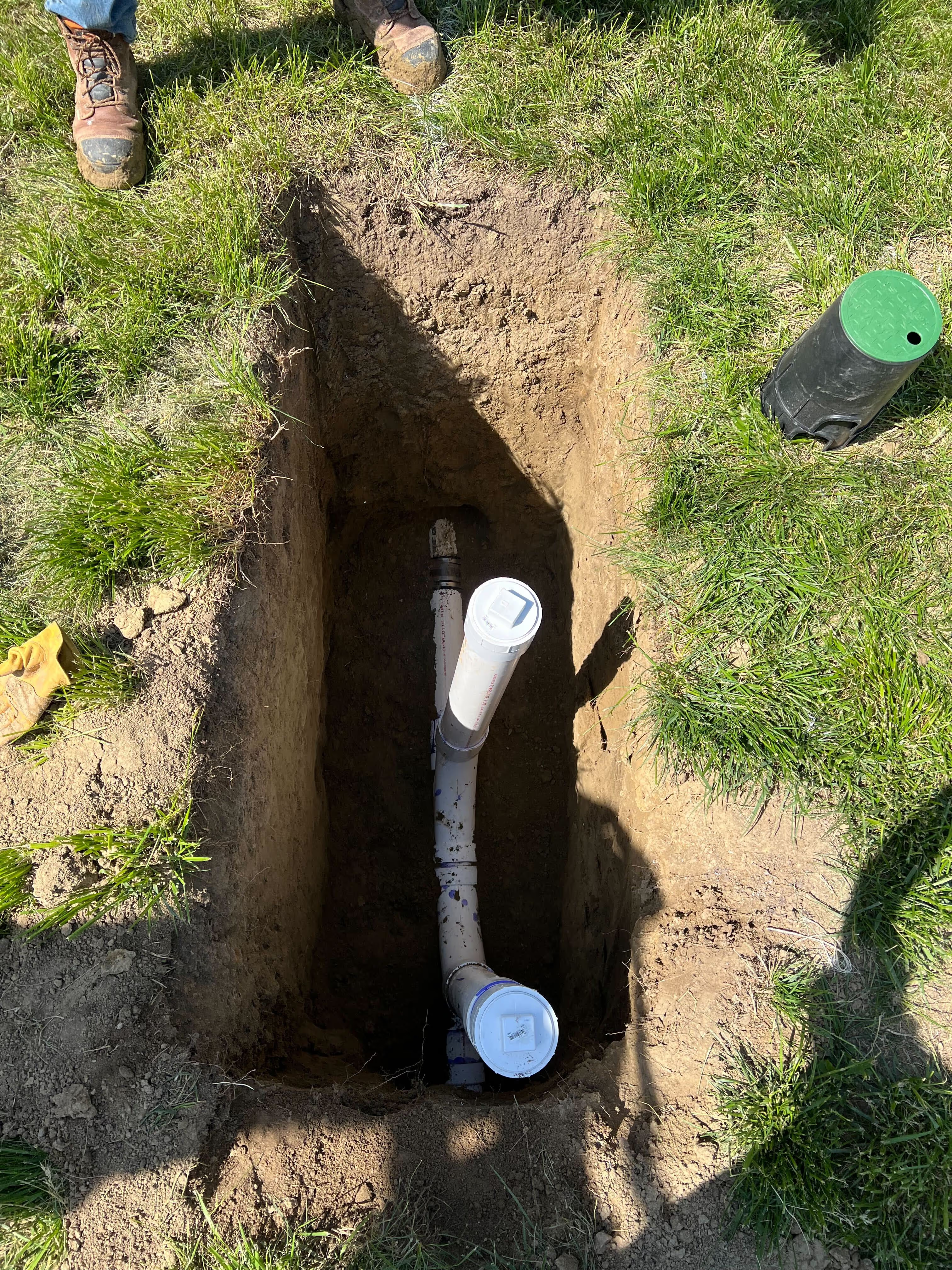
- Put on gloves and eye protection.
- Loosen the cap slowly so trapped pressure can escape.
- Shine a flashlight in, then have someone flush a toilet.
- Water that rises fast and stays high means a blockage further down. Cap it and call.
Logan's own words: "Water rising significantly in the cleanout is not normal and requires professional attention." If sewage is already standing in there, put the cap back and back away slowly, like you've met a bear. (Don't poke anything in. The pipe does not want your broom handle.)
What we see in Omaha sewer lines
Since 2017, Omaha Drain has run thousands of service calls a year and hundreds of sewer line replacements. A camera goes down every drain we clear, so every customer sees what caused their clog, and fewer of them ever have to call us back. What we find most under Omaha homes:
- Tree roots in clay and cast iron joints
- Bellies where the line has sagged
- Cast iron scaled up so badly it barely flows
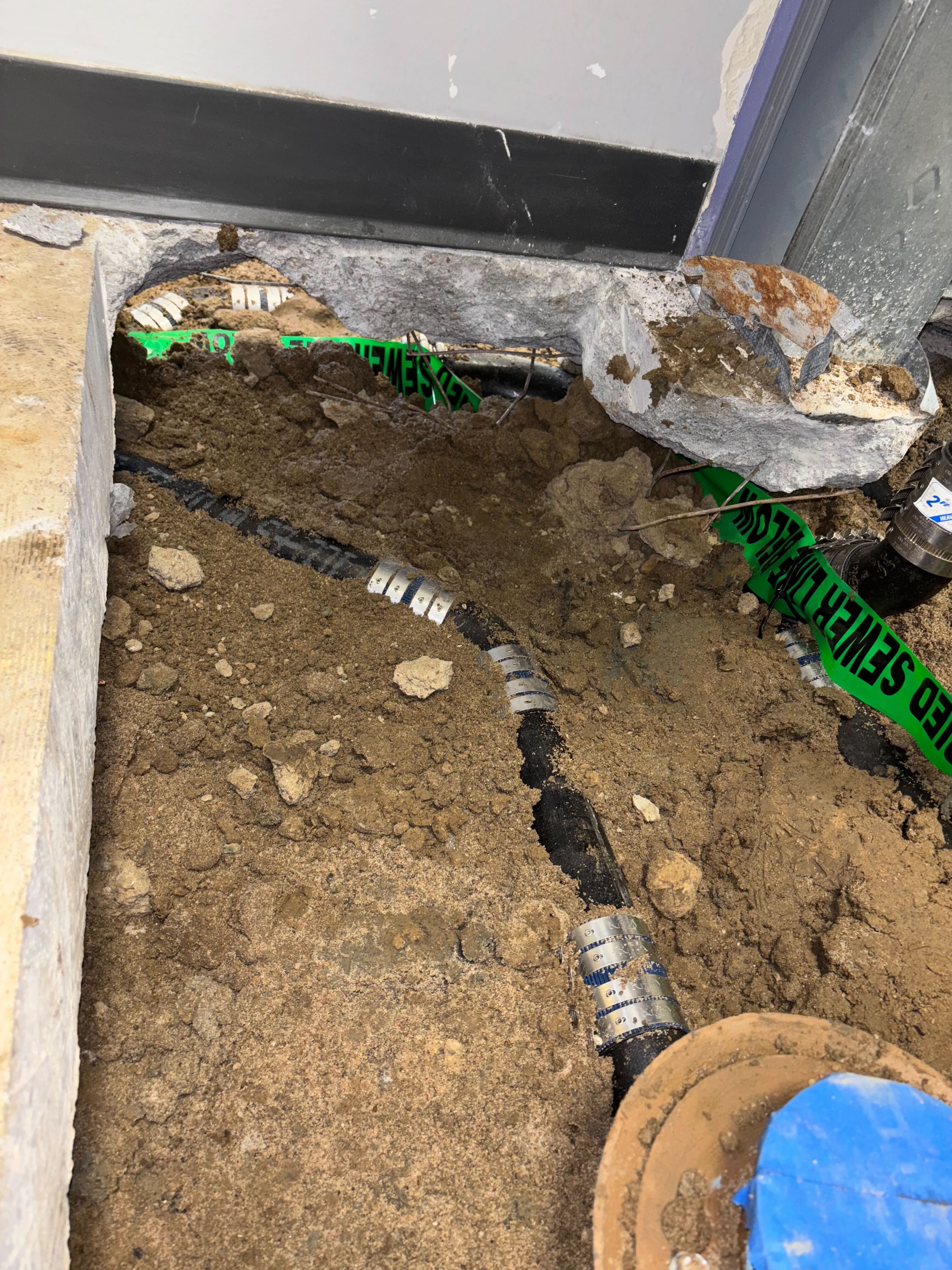
Cracked clay and grease show up too, just less often. One call started as a backed-up toilet, which is how most of my favorite stories start, and that says a lot about my life. A toilet auger didn't clear it, so our tech pulled the toilet (the toilet did not consent), cleared the line with a bigger snake, then sent the camera in. The cast iron under that toilet was horribly scaled up and narrowed, which is why the clogs kept coming back.
We ran a Picote descaling machine on it for about 3 hours to bring the pipe back to its full width.
The before and after photos delighted the customer, and a year later they haven't had another clog. That toilet had been snitching for months. Nobody listened. Classic.
"We bought our home in October, and unfortunately no one told us about the sewer issues lurking beneath it. ... What started as a simple repair quickly revealed a much bigger issue: our entire main sewer line needed to be replaced. Even with such overwhelming news, the Omaha Drain team turned a nightmare into a manageable experience."
Andrew L., 5-star Google review
Who pays when a sewer line breaks in Omaha?
In Omaha, the homeowner is responsible for the sewer pipe from the house all the way to the city main. WOWT reported in 2023 that the city quoted one property owner $13,000 to fix a crack in their private line. Yes, you can own a pipe under a street you don't own. Nebraska is wild.

Standard homeowners policies don't cover sewer backups, and neither does flood insurance. The Insurance Information Institute says you need a separate product or an endorsement, usually at a nominal cost. Call your agent this week and ask, "Do I have sewer backup coverage?" (It's a two-minute call. Shorter than this section.)
How much does sewer line damage cost to fix in Omaha?
Here are Omaha Drain's prices for the jobs these signs lead to.
National guides put the average replacement near $3,320 (This Old House), but that average blends short, shallow runs with long, deep ones. Your price depends on your own line's depth and length, which is what the camera shows.
(The camera is the cheap part. Guessing is the expensive part.)
| Job | Omaha Drain price |
|---|---|
| Simple clog | From $93 |
| Sewer camera inspection with recorded video | $350 on its own, or free with a drain cleaning |
| Belly or spot repair | Quoted from the camera footage, by how long and deep the bad section is |
| Full sewer line replacement | $10,000 to $20,000 depending on the depth and length of the pipe |
Prices as of October 2026.
Sewer line damage FAQ
What is the first sign of a sewer line problem?
Usually several drains slowing at once, or a toilet that gurgles when another drain runs. Both point past a single fixture to the main sewer line. A camera inspection confirms the cause.
Is a belly in a sewer line always a problem?
Not always. A small belly that doesn't cause clogs can be watched with camera checks. A belly that keeps catching waste usually needs that section dug up and re-laid, because lining can't correct a severe sag.
How long do sewer lines last?
Most sewer lines last 50 to 100 years depending on the material. PVC can last 100 years or more, while clay and below-ground cast iron often last 50 to 60 years.
Can sewer lines freeze?
Yes, especially shallow lines in dry soil with no snow cover during long cold snaps, or in houses left empty for a week or more.
Does homeowners insurance cover sewer line damage?
A standard homeowners policy doesn't cover sewer backups. Coverage comes from a sewer backup endorsement or a separate service line policy.
How much is a sewer camera inspection in Omaha?
At Omaha Drain, a sewer camera inspection with recorded video is $350 on its own, or included free with a drain cleaning.
Seeing two or more of these signs?
Book a sewer camera inspection in Omaha and you get the recorded video of your line, so you know exactly what's wrong before anyone picks up a shovel. If the camera finds a break, our sewer line repair team quotes the fix from that footage. Call (402) 200-5059.

Written by Raad Chfat, owner of Omaha Drain, with 20 years in plumbing and drain work.


